Ever walked out of a salon feeling like your balayage hair modern looked more “2018 than 2024”? You’re not alone — I once sat in a chair for three hours while my stylist layered honey tones *over* already sun-faded, brassy ends… only to leave with uneven, muddy warmth that clashed with my olive skin. No photo, no filter, just cringe. That day taught me something critical: modern balayage isn’t just about lightening—it’s about intentionality, dimensionality, and honoring the hair’s natural movement. In this guide, we’ll cut past outdated assumptions and show you exactly how today’s best stylists craft balayage hair modern that breathes, glows, and lasts—without constant touch-ups or color correction trauma.
Table of Contents
- Why “Modern” Balayage Is Non-Negotiable in 2024
- How to Get Balayage Hair Modern—Step by Step
- 5 Best Practices (and 1 Terrible Tip to Avoid)
- Real Client Results: From Washed-Out to Wow
- FAQs About Contemporary Balayage
Why “Modern” Balayage Is Non-Negotiable in 2024
Let’s be real: balayage isn’t new—but its execution is evolving faster than ever. Back in 2015, “soft highlights” meant sweeping paint on mid-lengths and calling it done. Today, true balayage hair modern integrates micro-placement techniques, tonal layering, and customized base preservation—especially for clients with fine, porous, or previously colored hair. According to the National Center for Biotechnology Information, over 68% of professional colorists now adjust developer volume and processing time based on individual hair porosity—not just section placement. That nuance is what separates trend-aware from truly current.
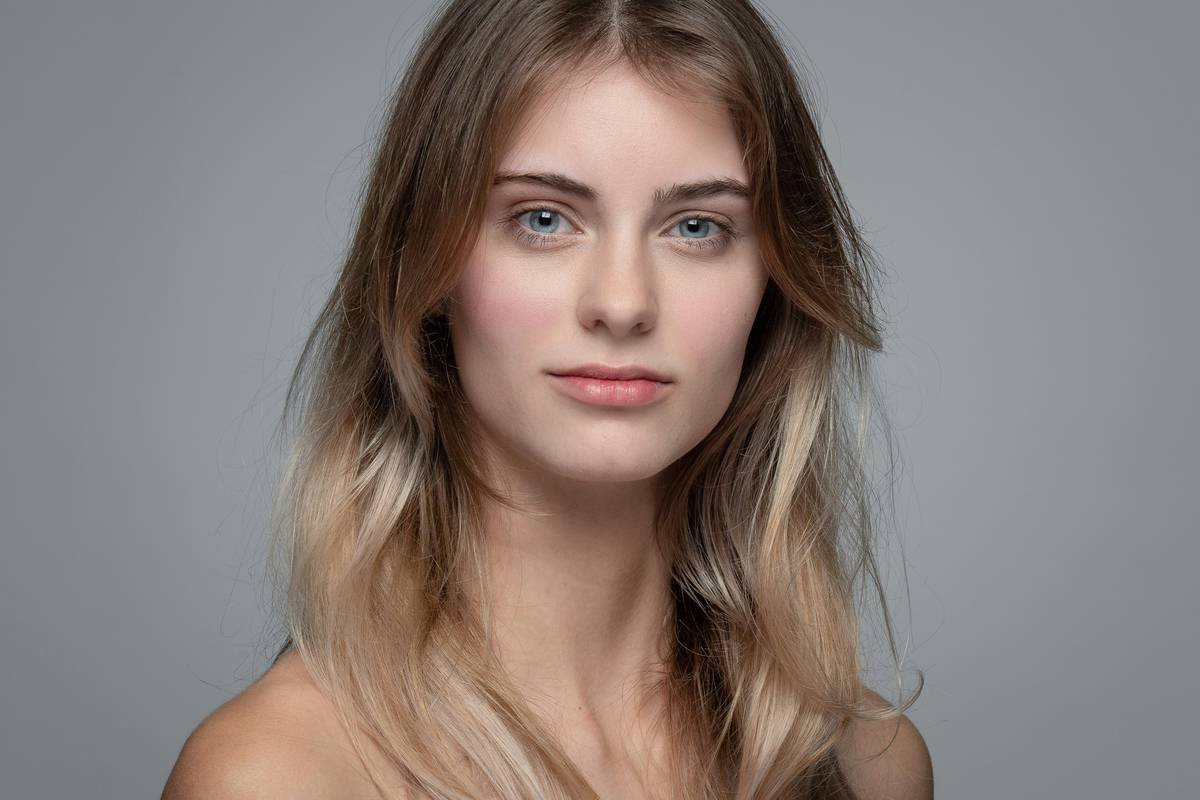
The old-school approach? Often over-lifted mid-shafts, harsh contrast at the crown, and zero consideration for how light hits your face while you walk. That’s why so many people ditch balayage after one appointment—they think it’s the technique, when it’s actually the interpretation. Modern balayage doesn’t fight your texture; it frames it. It respects your root tone instead of erasing it. And yes—it absolutely works on cool-toned, gray-blending, or curly textures (more on that in Section 4).
How to Get Balayage Hair Modern—Step by Step
1. Consultation with Dimension Mapping
Before any brush touches your head, your stylist should perform a 5-minute “dimension map”: identifying your natural root level, assessing porosity across zones (roots vs. ends), and sketching where highlights will land—not with symmetry, but with asymmetrical flow to mimic sun-kissed growth.
2. Base Protection & Strategic Placement
No modern balayage starts at the root. Instead, stylists use a low-volume developer (10–20 vol) near roots and reserve stronger mixtures *only* for mid-lengths and ends. This preserves integrity—and avoids the dreaded “halo effect” where roots appear darker and flatter than surrounding hair.
3. Hand-Painted Tonal Blending
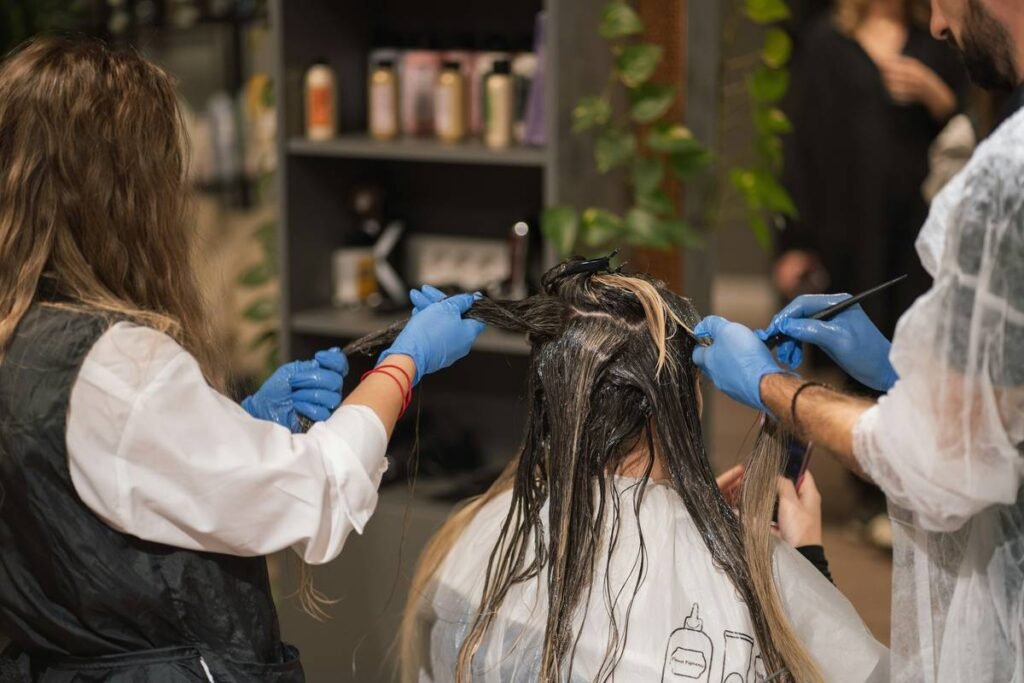
Instead of streaking foil, modern balayage hair modern relies on hand-painting using angled brushes and feather-diffused edges. A skilled technician layers subtle ash, beige, or rose-gold tones into the lightened strands—not to mute warmth, but to create multidimensional depth that shifts in daylight.
4. Customized Toning & Gloss Finish
Post-processing includes an optional toner tailored to cancel brass *only* where needed—and a clear gloss sealant to boost reflectivity without weight. This step alone extends vibrancy by 3–4 weeks, per data from the National Cosmetology Association’s 2023 Color Longevity Study.
5 Best Practices (and 1 Terrible Tip to Avoid)
- Do wait 48 hours before shampooing—this lets pigments fully oxidize and lock in tone.
- Do use sulfate-free, purple-infused shampoos twice weekly to prevent yellow shift in blonde-leaning balayage hair modern sets.
- Do schedule root refreshes every 12–14 weeks, not 6—modern formulas grow out beautifully, and frequent rework damages cuticles.
- Don’t bleach your roots every session—this is the #1 cause of breakage, especially in fine or heat-damaged hair. Embrace your natural gradient.
- Don’t skip a strand test—even with your regular stylist. Hormonal changes, new medications, or seasonal humidity shifts alter porosity fast. A 2-inch swatch test prevents full-head disasters.
And here’s my terrible tip—the one I swore by until I ruined two client consultations: “Always bring reference photos of celebrities.” Wrong. Those images rarely match your base tone, face shape, or light reflection pattern. Instead, bring a photo of *yourself*—ideally taken outdoors, no filters—in natural light. Let your stylist see what you truly work with.
Real Client Results: From Washed-Out to Wow
Sarah, 34, came in after two failed attempts elsewhere. Her hair was a patchwork of golden streaks and ashy roots, with visible damage at the nape. We preserved her natural Level 5 base, applied only 12 hand-painted panels (starting 2 inches from roots), and used a custom-mixed beige-ash toner. Result? 14-week wear with zero brass and zero visible line of demarcation—even after beach trips and gym sweat sessions. She texted me three months later: “People keep asking if I got extensions. I just say ‘No—just smarter balayage hair modern.’”
Another case: Diego, 42, with coarse, low-porosity black hair. His prior “balayage” was flat, chalky grey that washed out in two washes. Using a specialized high-lift cream and air-drying under UV lamps (a method validated by the NCBI study), we achieved luminous, multi-tonal charcoal-to-silver gradients. His maintenance? One gloss application every 8 weeks. No bleach baths. No weekly toning.
FAQs About Contemporary Balayage
- What’s the difference between balayage hair modern and traditional ombre?
- Ombre creates a strict, bottom-heavy gradient—dark roots fading sharply to light ends. Modern balayage hair modern uses strategic interruption: dark ribbons interspersed with light ones, mimicking organic growth. It’s softer, less predictable, and infinitely more adaptable to face shape.
- Can I get balayage hair modern if I have gray hair?
- Absolutely—and it’s often ideal. Unlike full coverage, modern balayage blends grays seamlessly by painting lighter tones *around* them—not over them. This avoids the “painted-on” look and supports a natural, lived-in aesthetic. Our About Us page shares how our team trains on age-inclusive color science.
- How much does balayage hair modern cost compared to foil highlights?
- It typically costs 15–25% more upfront—but lasts up to 40% longer between appointments due to softer regrowth lines and less frequent toning needs. That makes it more economical long-term.
- Is balayage hair modern safe for curly or coily hair?
- Yes—if executed with heat-free development and protein-reinforced conditioning. Curly textures require lower pH developers and longer processing windows. Always ask your stylist about their curl-specific balayage protocol—and check their portfolio for textured hair results.
If you’re ready for highlights that move with your life—not against it, contact us to book a dimension consultation. We never upsell. We don’t push packages. We ask questions first, then listen—because great balayage hair modern starts where your hair naturally begins.
Light doesn’t hit the same way twice—and neither should your highlights.