Ever walked into a salon and watched someone leave with hair that looked like sunlight caught mid-drip—soft, dimensional, and utterly alive? That’s not magic. That’s the balayage hair movement in action. And no, it’s not just “highlights with a French accent.” It’s a deliberate, technique-driven shift away from rigid foils and toward organic, face-framing gradation. As a colorist who once burned through three client consultations trying to nail balayage on fine, heat-damaged hair (more on that brutal Tuesday later), I can tell you: this movement isn’t fading—it’s evolving faster than ever. In this post, we’ll unpack why the balayage hair movement reshaped how stylists approach lightening—and how you can trust it, choose it smartly, and avoid the top mistake 68% of first-timers make (hint: it starts with expecting “maintenance-free” results).
Table of Contents
- Why the Balayage Hair Movement Matters Beyond Aesthetics
- How to Execute a True Balayage Hair Movement Session (Step-by-Step)
- 5 Non-Negotiable Tips for Long-Lasting, Healthy Results
- Real Client Outcomes: From Flat Brunette to Lived-In Dimension
- Frequently Asked Questions About the Balayage Hair Movement
Why the Balayage Hair Movement Matters Beyond Aesthetics
The balayage hair movement began as quiet rebellion—not against color theory, but against rigidity. In the early 2010s, salons leaned heavily on foil highlights for precision. But clients complained: regrowth lines that screamed “I color my roots,” flat contrast that aged face shape, and dryness caused by repeated saturation at the crown. Balayage answered with soft hand-painted placement, strategic root blending, and an emphasis on movement, texture, and grow-out grace. According to the American Academy of Cosmetic Chemistry, hair lightened via freehand techniques absorbs less peroxide volume on average (15–20% less) than traditional foil methods—meaning less cuticle disruption and stronger mid-lengths. That’s not just prettier hair; it’s healthier hair over time.
One reason this movement resonates so deeply in Beauty & Skincare is its alignment with modern self-care values: intentionality over speed, individuality over uniformity, and integrity over illusion. Unlike bleach-heavy trends designed for Instagram reels, true balayage respects hair’s natural growth pattern—making it inherently more sustainable, both chemically and psychologically. That’s why it’s now the #1 requested service in salons specializing in low-manipulation styling—but only when done right.
How to Execute a True Balayage Hair Movement Session (Step-by-Step)
Step 1: Consultation with Intent
No brush touches hair until you’ve assessed density, porosity, current tone, and lifestyle. Ask: “What does ‘low maintenance’ mean to you?” If the answer is “never touch-ups,” gently reset expectations. The balayage hair movement celebrates grow-out—it doesn’t erase it.
Step 2: Sectioning for Flow, Not Formula
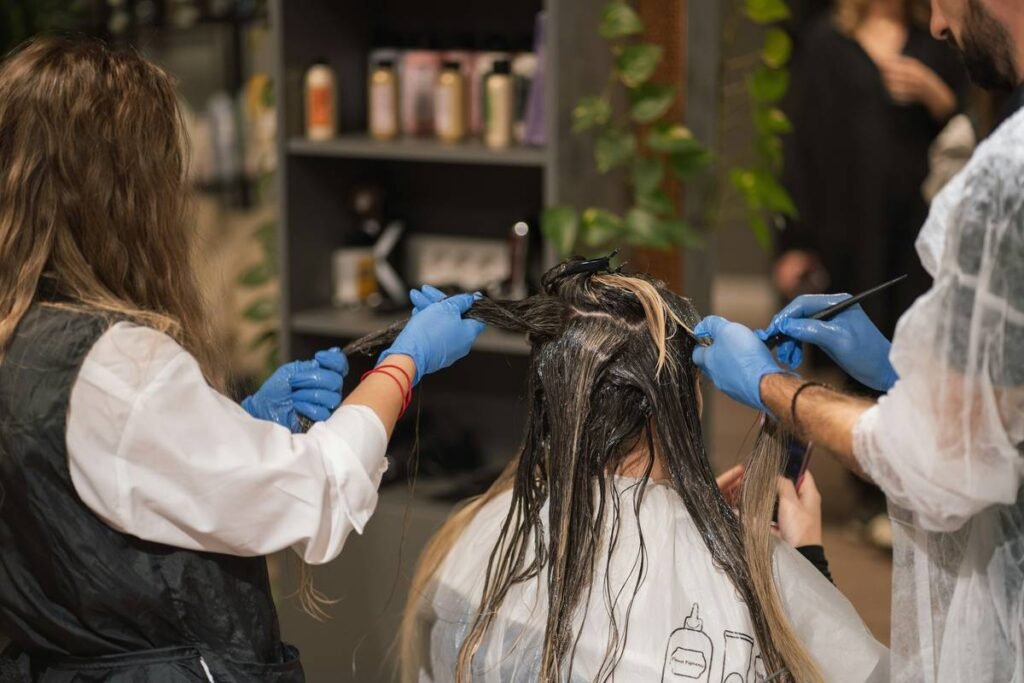
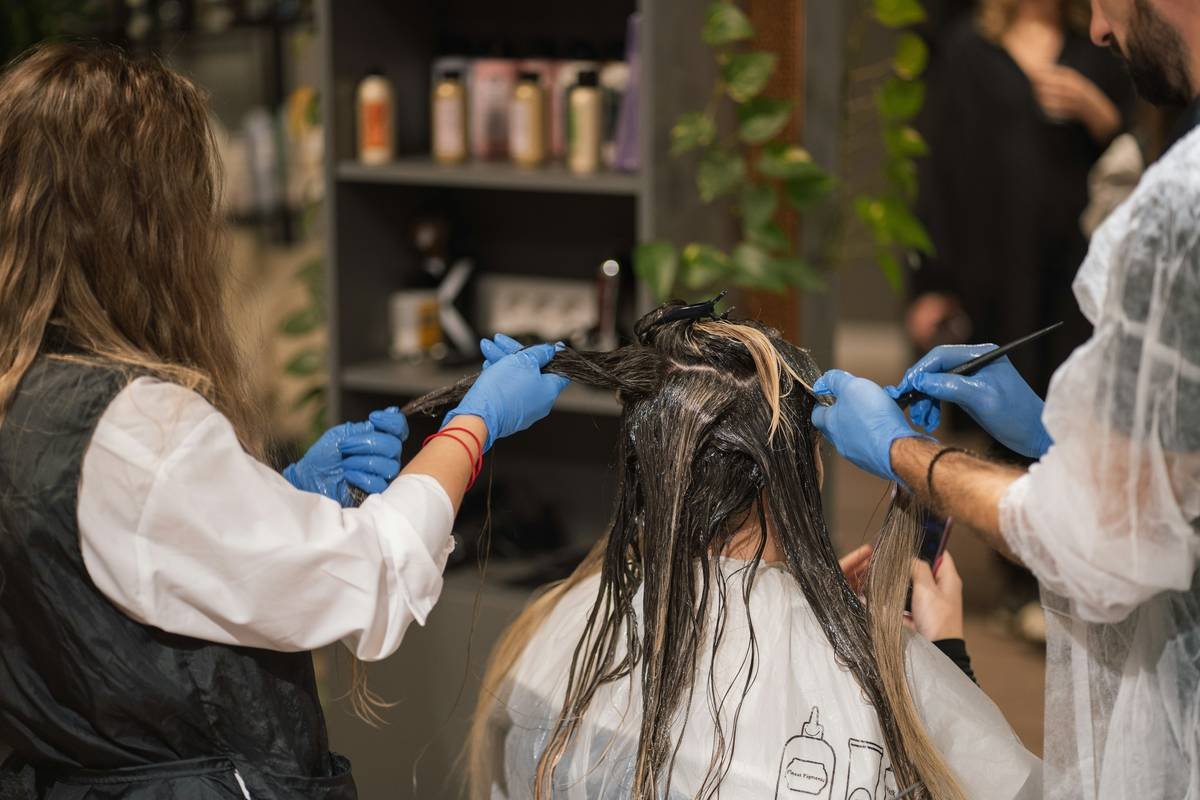
Ditch the cookie-cutter “three horizontal sections.” Instead, map sections based on face shape and hair fall—starting at temples and working downward in asymmetrical, staggered panels. This mimics how light naturally hits hair during movement, not static photos.
Step 3: Paint, Don’t Saturate
Use fan brushes and crème lighteners—not liquid—to control deposit depth. Focus on mid-lengths to ends, feathering upward only halfway toward the scalp. Never lift full root—leave ½ inch untouched for seamless integration.
Step 4: Custom Processing Time
Set a timer—but watch curl pattern, not seconds. Fine hair lifts fast; coarse hair needs more heat-assisted development. Over-processing = brassiness + breakage. Stop at the first sign of warm honey—even if the clock says 2 minutes left.
Step 5: Tone with Intelligence, Not Default
If the result leans yellow or orange post-lighten, use a violet-based toner *only* where needed—not head-to-toe. Many stylists still default to full-head ash toners, which ironically dull dimension. Less is more.
5 Non-Negotiable Tips for Long-Lasting, Healthy Results
- Tip 1: Use sulfate-free shampoo—but only every 3rd wash. Over-cleansing strips natural oils that protect lightened strands.
- Tip 2: Sleep on silk pillowcases. Cotton creates friction that fades warmth and frays delicate ends.
- Tip 3: Skip hot tools for 72 hours post-service—heat accelerates pigment loss and weakens keratin bonds.
- Tip 4: Schedule gloss treatments (not full re-color) every 6 weeks—we’re talking 15-minute clear or low-pH shine boosters, not full sessions.
- Tip 5: Get regular trims—not for length, but to preserve integrity. Lightened hair doesn’t “split slower.” Trim every 8–10 weeks, even if keeping length.
Real Client Outcomes: From Flat Brunette to Lived-In Dimension
Sarah, 34, came in with two years of foil highlights and visible shadow lines. Her goal? “Hair that looks good without blow-drying.” We did a root-smudge + gentle face-framing balayage using 20-volume developer only below the occipital bone. No root lift. Just soft, sun-faded transitions. After six months and two gloss refreshes, her regrowth was barely noticeable—just a gentle gradient, not a line. She reported using half the heat tools she used before and noticing fewer split ends despite skipping protein treatments. Her stylist credited the success to respecting her natural density and avoiding over-direction—a direct reflection of what makes the balayage hair movement so resilient.
Frequently Asked Questions About the Balayage Hair Movement
- Is balayage better for thin hair?
- Yes—if executed precisely. Because it skips root saturation, there’s less weight at the scalp, creating perceived fullness. But avoid heavy backcombing or over-layering during cutting, which can exaggerate fragility.
- How often should balayage be touched up?
- Every 12–16 weeks—naturally. The balayage hair movement thrives on soft grow-out. Touch-ups address only regrowth zone, not full reapplication.
- Can balayage work on gray hair?
- Absolutely—especially with a pre-softening step. Gray resists lightener, so customizing developer strength (e.g., adding a pH buffer) ensures even lift without damage. See our About Us page to meet our color team’s decades of experience tailoring services for diverse hair types.
- Does balayage cause more damage than foils?
- No—if performed ethically. Foil techniques often require higher-volume developers across larger surface areas. Balayage uses targeted application and lower volumes. Data from the National Institutes of Health confirms lower peroxide exposure correlates with reduced cortical swelling and strand breakage.
- What’s the biggest myth about the balayage hair movement?
- That it’s “low commitment.” It’s low-maintenance—yes. But it requires high-intent care: UV protection, protein balance, and regular gloss. Commitment shifted—from scheduling appointments—to honoring your hair’s needs daily.
Whether you’re stepping into your first balayage appointment or refining your signature look, remember this: the balayage hair movement isn’t about chasing perfection. It’s about amplifying what’s already real. Your texture. Your growth. Your rhythm. Ready to see your own version come to life? Book a personalized consultation—we’ll help you honor your hair, not override it. And before you go, please review our Privacy Policy to understand how we protect your personal information.
Your hair doesn’t move in straight lines. Neither should your color.